A planner built on your school’s real term dates
Every picture on this page is the planner itself, photographed while it runs: a real school’s year imported, its own subjects in the timetable, real homework typed into the form. Nothing here is a mock-up.
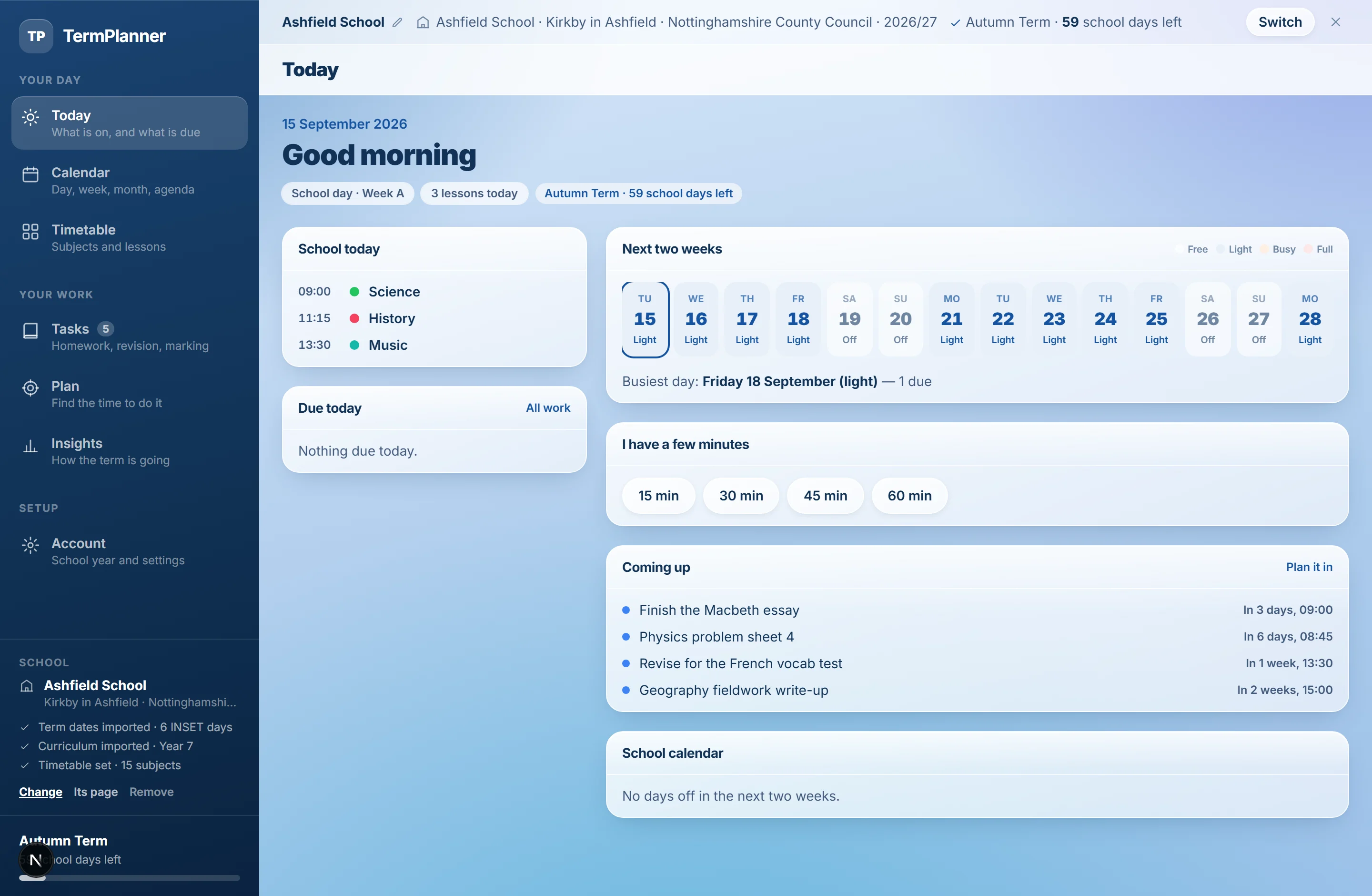
What is on, and what is due
The day you are actually in. Which lessons, which week of the fortnight, what is due and how heavy the next two weeks look, with the busiest day named before you walk into it.
- Week A or Week B, worked out from the calendar rather than counted by hand
- Every closed day already known, so a Monday off is not a surprise
- A few free minutes, and something sensible to spend them on
Four ways to see the term
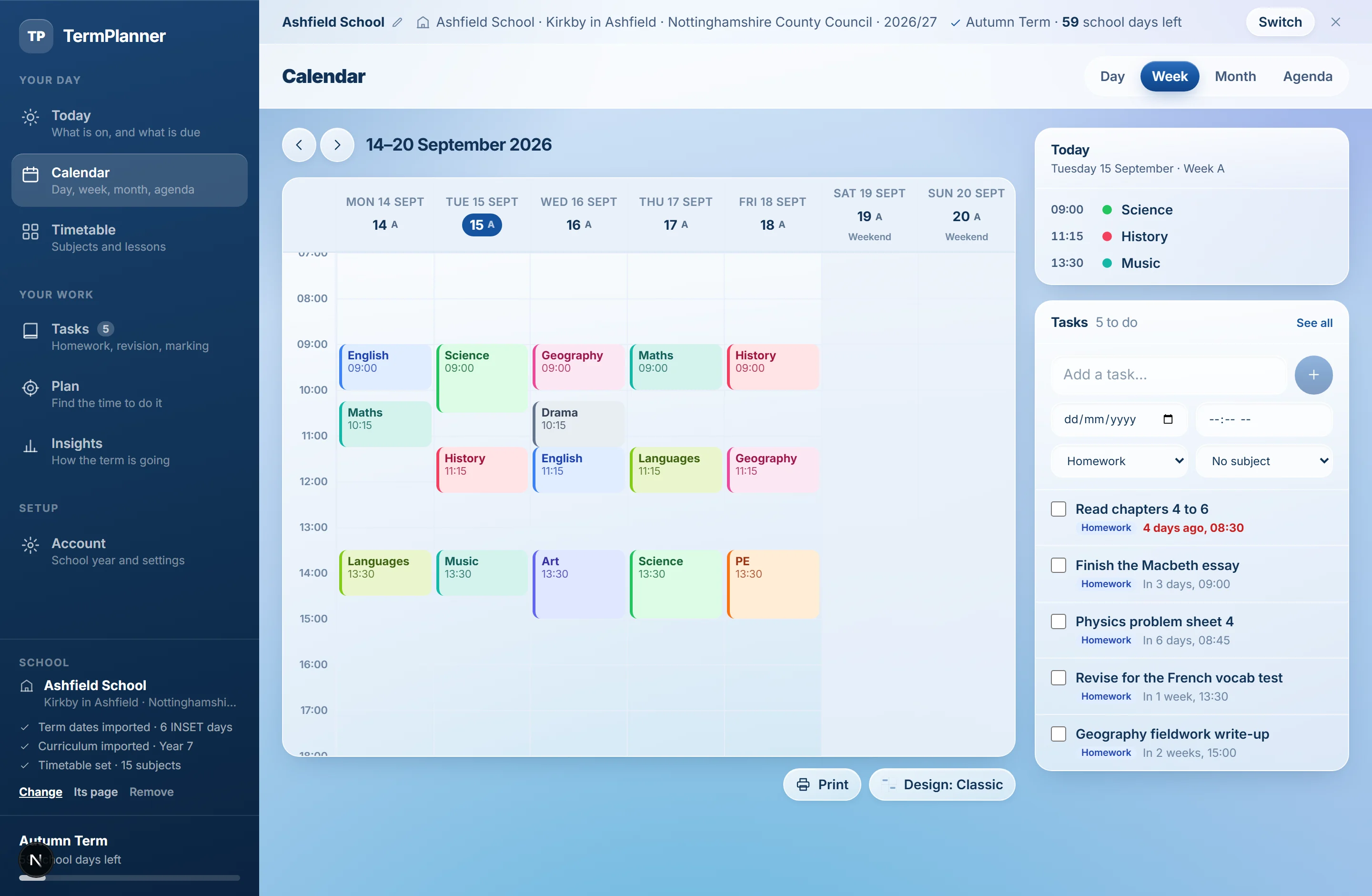
Day, week, month and agenda, over a year that already carries the term dates. Closed days are shaded and lessons vanish from them, because a timetable that runs through half term is worse than no timetable.
- Term dates, half terms, holidays and INSET days already in place
- Homework sits on the calendar beside the lessons it belongs to
- Five ways to draw a day, so the shading can suit the way you read
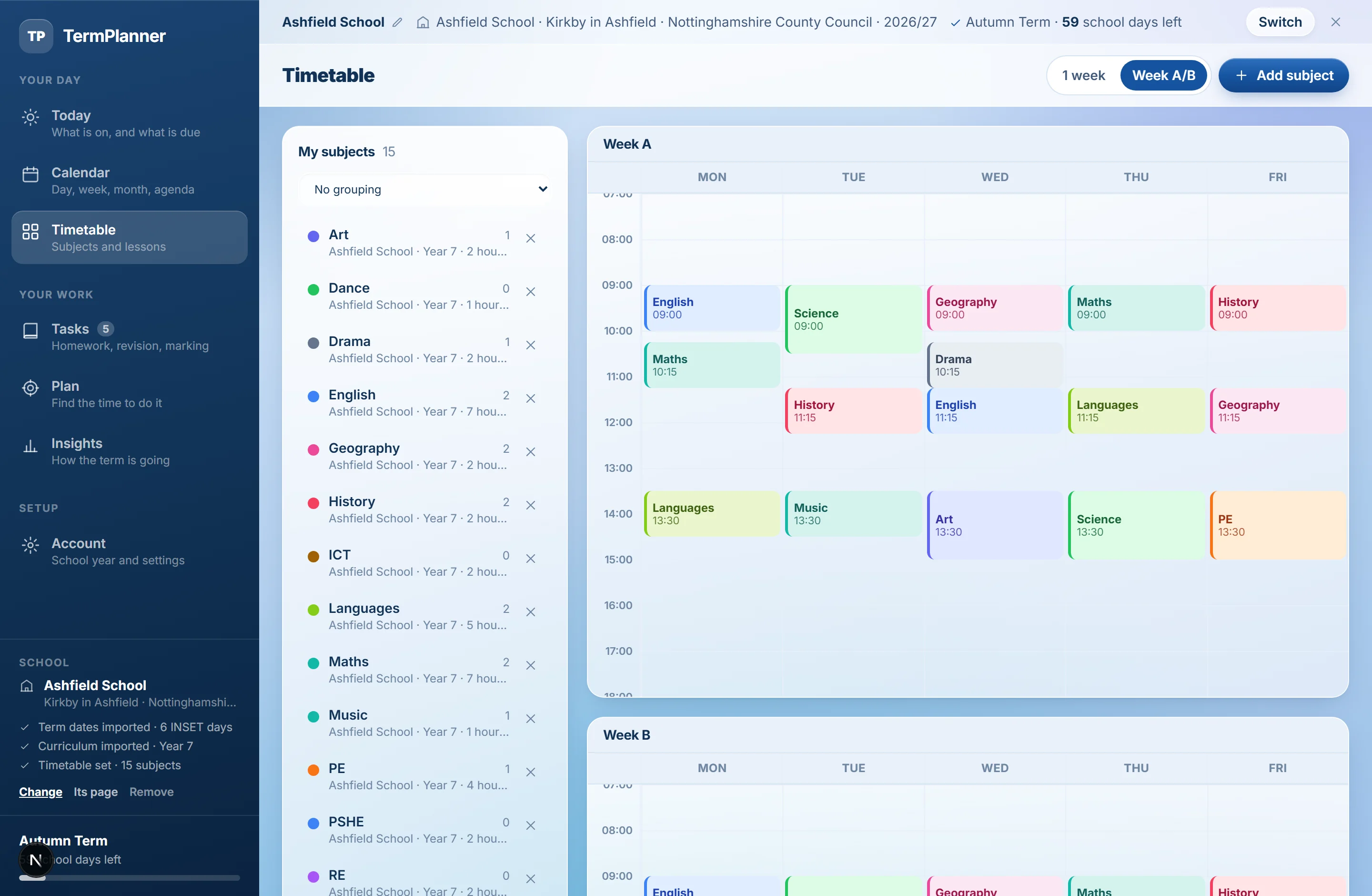
A timetable that knows the fortnight
Subjects, teachers, rooms and periods across Week A and Week B. The rotation is counted in calendar weeks, so it carries straight through half term instead of restarting after it.
- Week A and Week B side by side, or a single repeating week
- Subjects imported from the school's own curriculum where it publishes one
- A colour per subject, carried onto the calendar and the homework
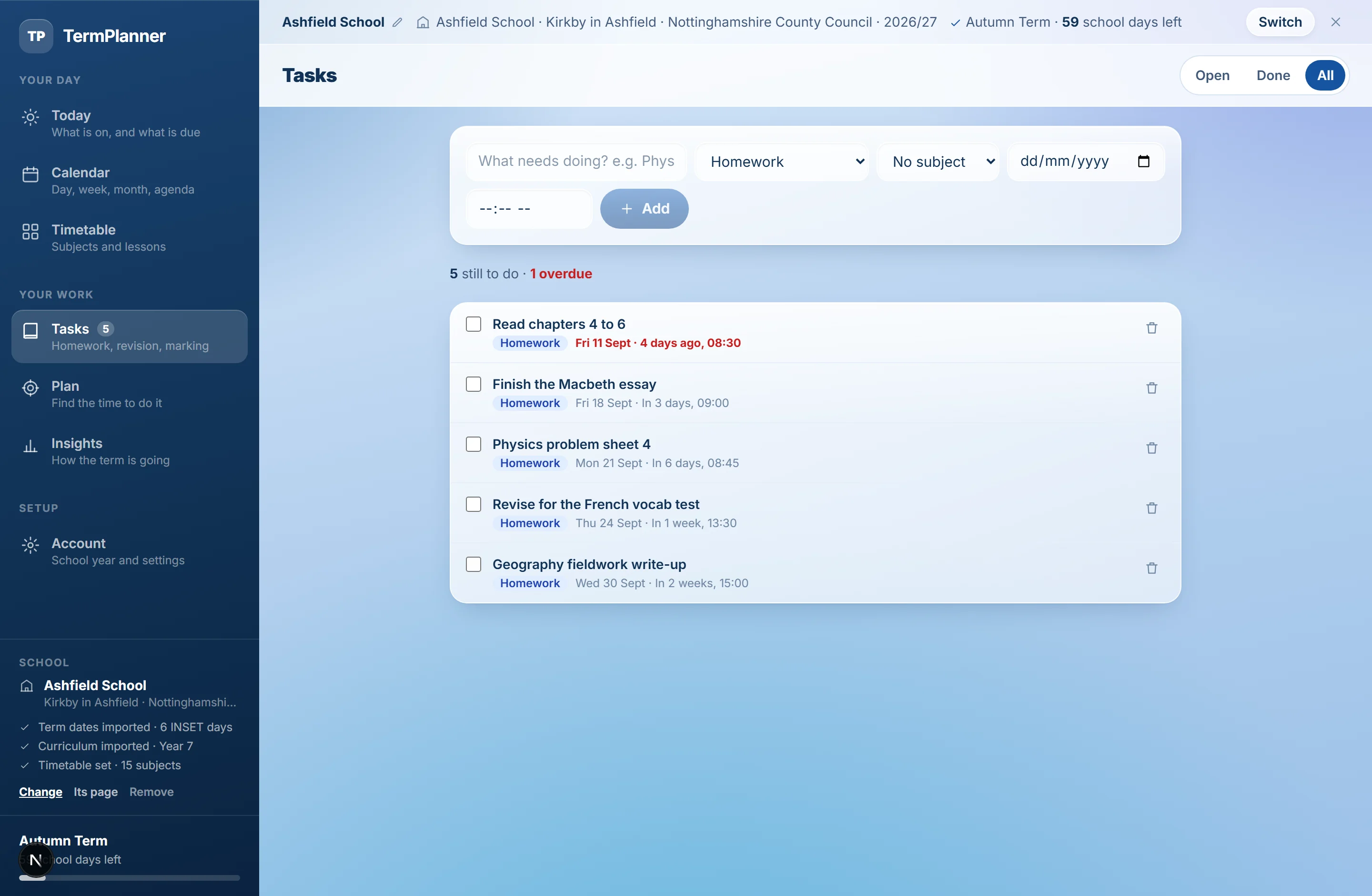
Homework, with the deadline it actually has
Work is due at a moment, not on a day. Hand-in at nine on Friday is the normal case, so the form takes a time as well as a date and the planner sorts by when things are really due.
- Homework, revision, coursework and marking, each kind counted separately
- Tied to a subject, so it inherits that subject's colour
- Overdue work called overdue rather than quietly listed
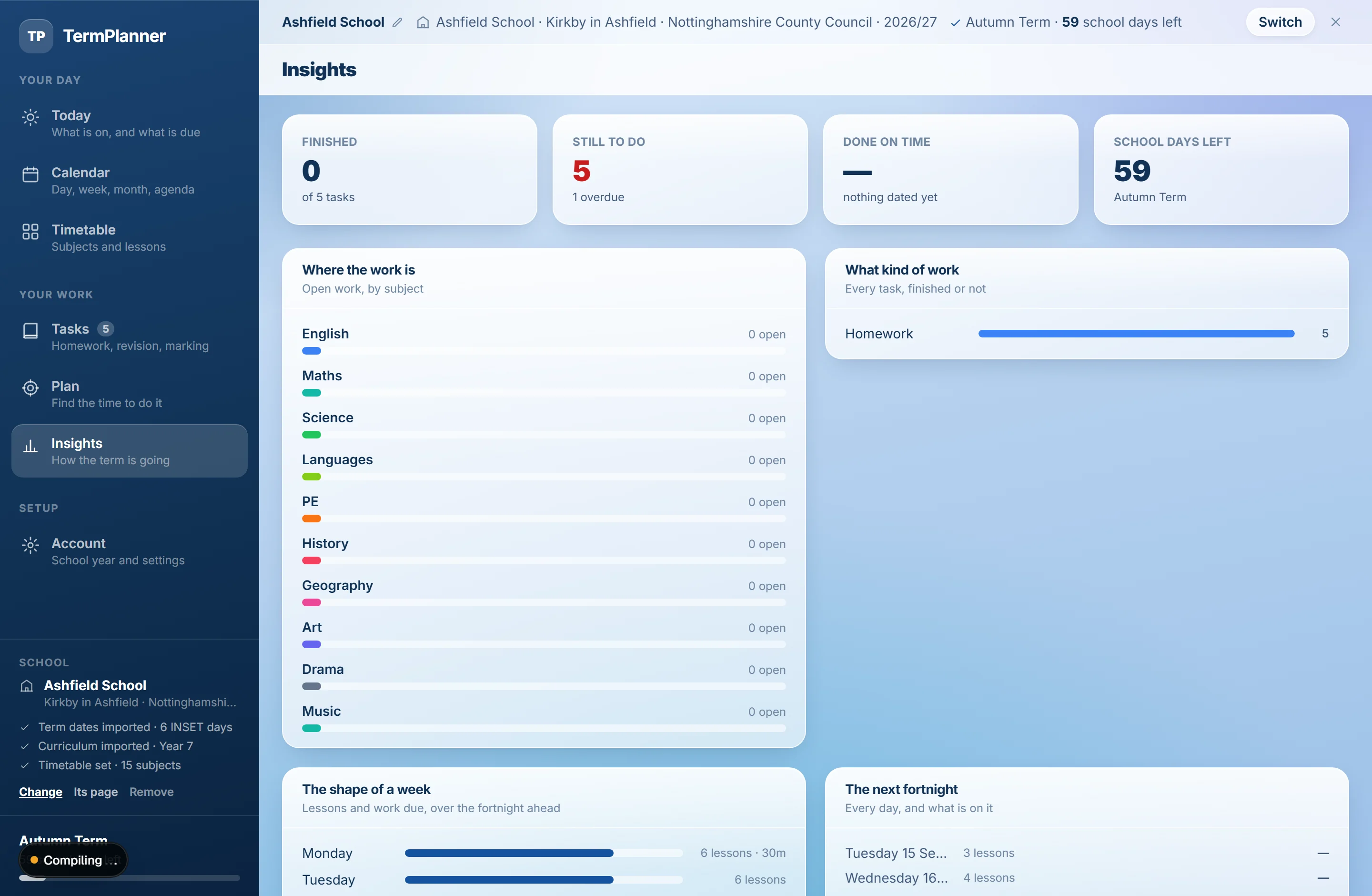
How the term is actually going
How far through the term you are, where the work is piling up and which weekday carries the most. Not a score, a picture of the shape of the term, so a heavy fortnight can be seen coming.
- The term's progress in school days, not in dates
- Workload by week, so a bad fortnight shows up before it arrives
- Which subjects are taking the time
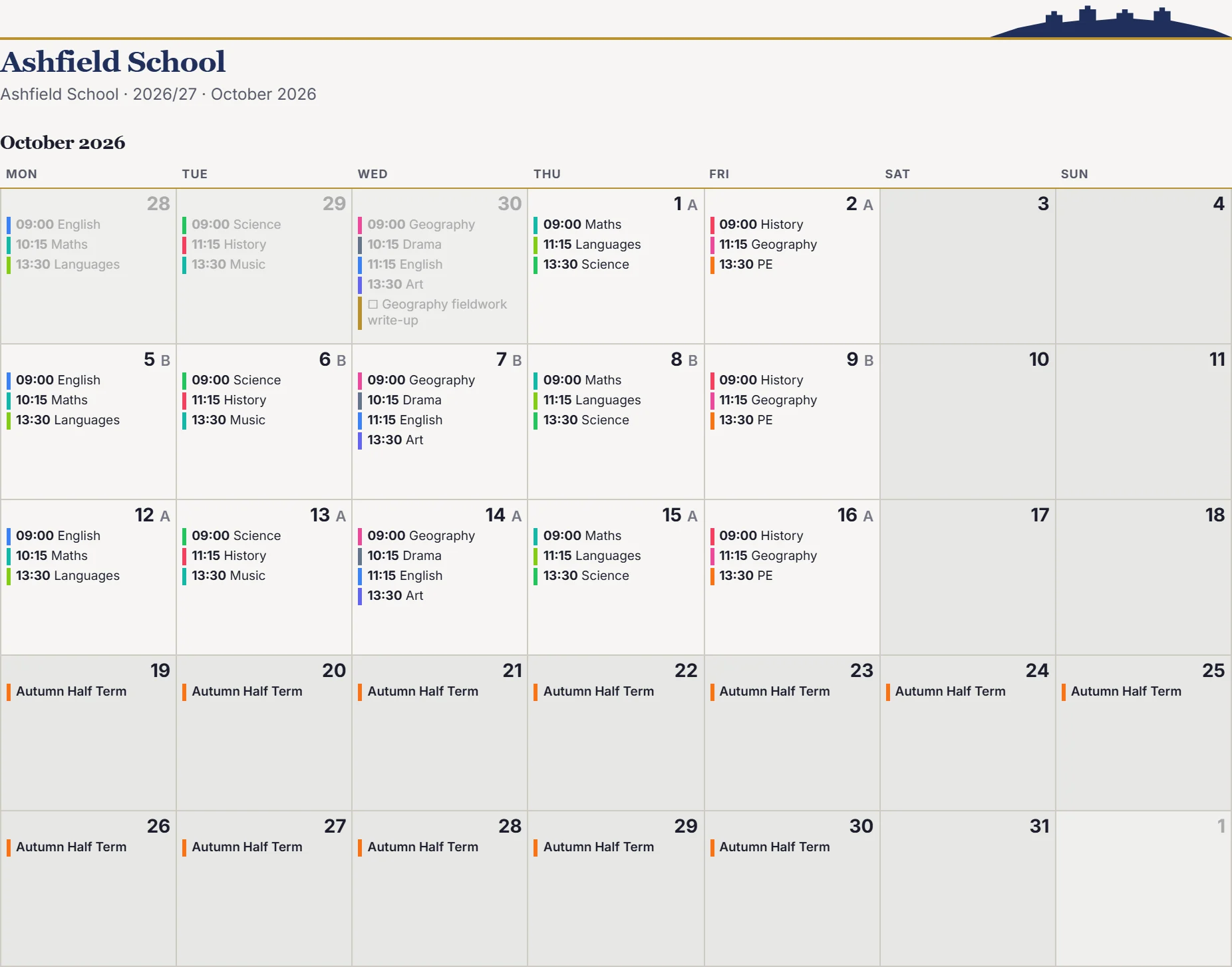
A calendar for the wall, on paper named for a place
Pick the months, choose the paper, and print. Ten designs, each drawn from somewhere in Britain: Bath's cream stone and Georgian serif, the Highlands' heather under a ridge line, Edinburgh's castle over a gold rule, a wave along the foot of every Cornish page. Then set it out the way you would a table before printing it: the type, the cell height, where the date sits, which way the text leans.
- Ten papers (Bath, the Highlands, the Lakes, Cornwall, Edinburgh, the Cotswolds, Stonehenge, Oxford, the Giant's Causeway, Snowdonia) and a plain one for the photocopier
- Font, type size, cell height and padding, rule weight, date position and size, text alignment: every one a slider or a switch, and a Reset
- Line art and flat colour only, so it prints as well on a school printer as on a good one
- Free planners print two months at a time; Premium prints the whole year and unlocks every theme. See Pricing
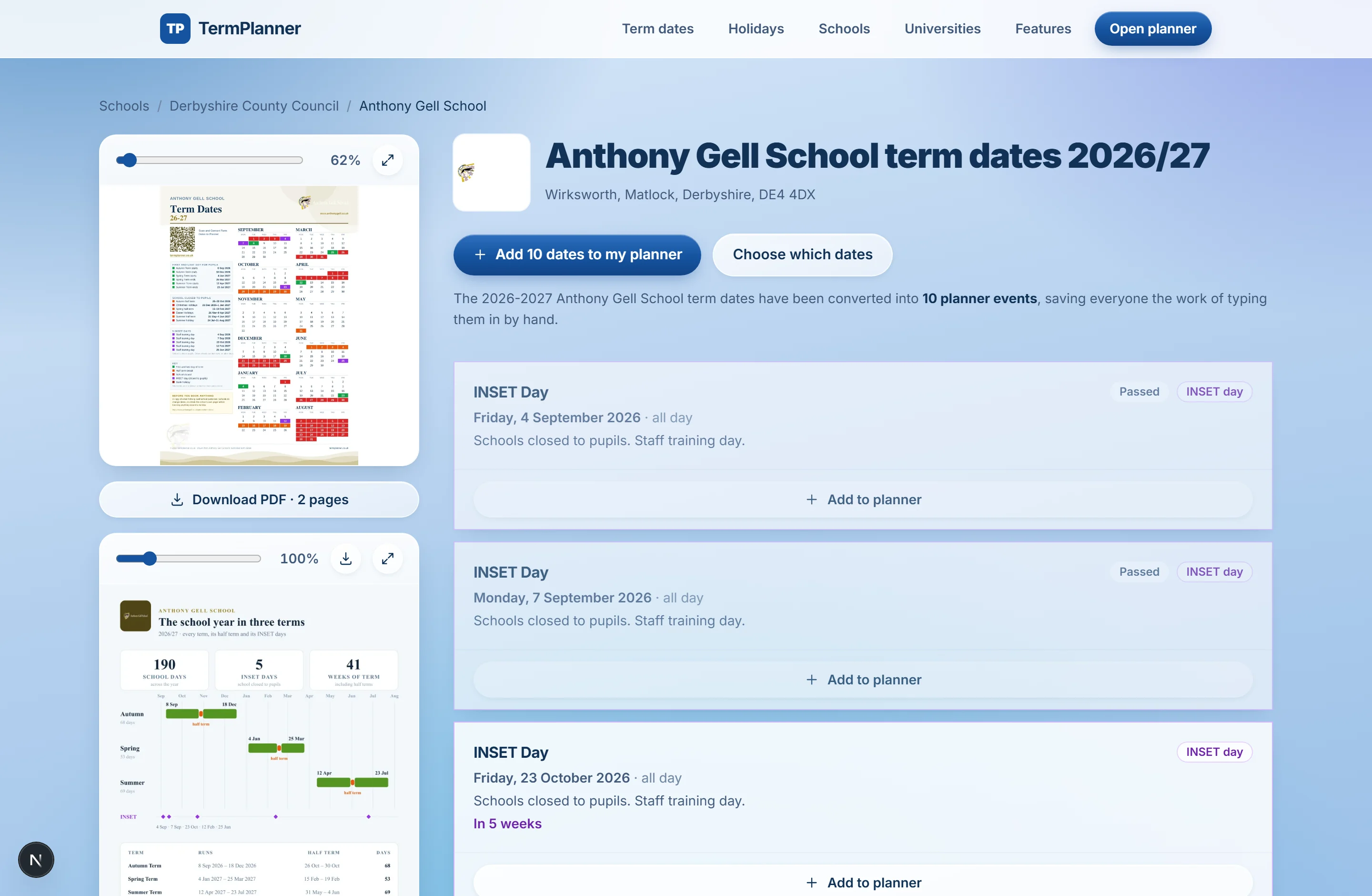
It starts with the dates
The planner is only worth anything if the year underneath it is right. 2117 schools and 146 councils are published here, each read from what they themselves put out, and every council’s school holidays on their own.