How TermPlanner organises term dates
A school year is published in a dozen places and agrees with itself in none of them. The council prints one calendar, the academy down the road runs a different one, and both set INSET days nobody else has. This is how that gets sorted out.
Why the council’s calendar is not enough
- 1942 of 2117
- schools run a year that differs from their own council's
- Not by a rounding error either: some open a fortnight later and finish a fortnight after the council says the year has ended.
- 2088 of 2117
- set INSET days of their own
- Days the school is shut to pupils and the council calendar cannot tell you about, because the school chooses them.
- 146
- councils, transcribed from their own calendars
- The fallback when a school publishes nothing, and the thing every school's year is checked against.
One. Find the school, not just the council
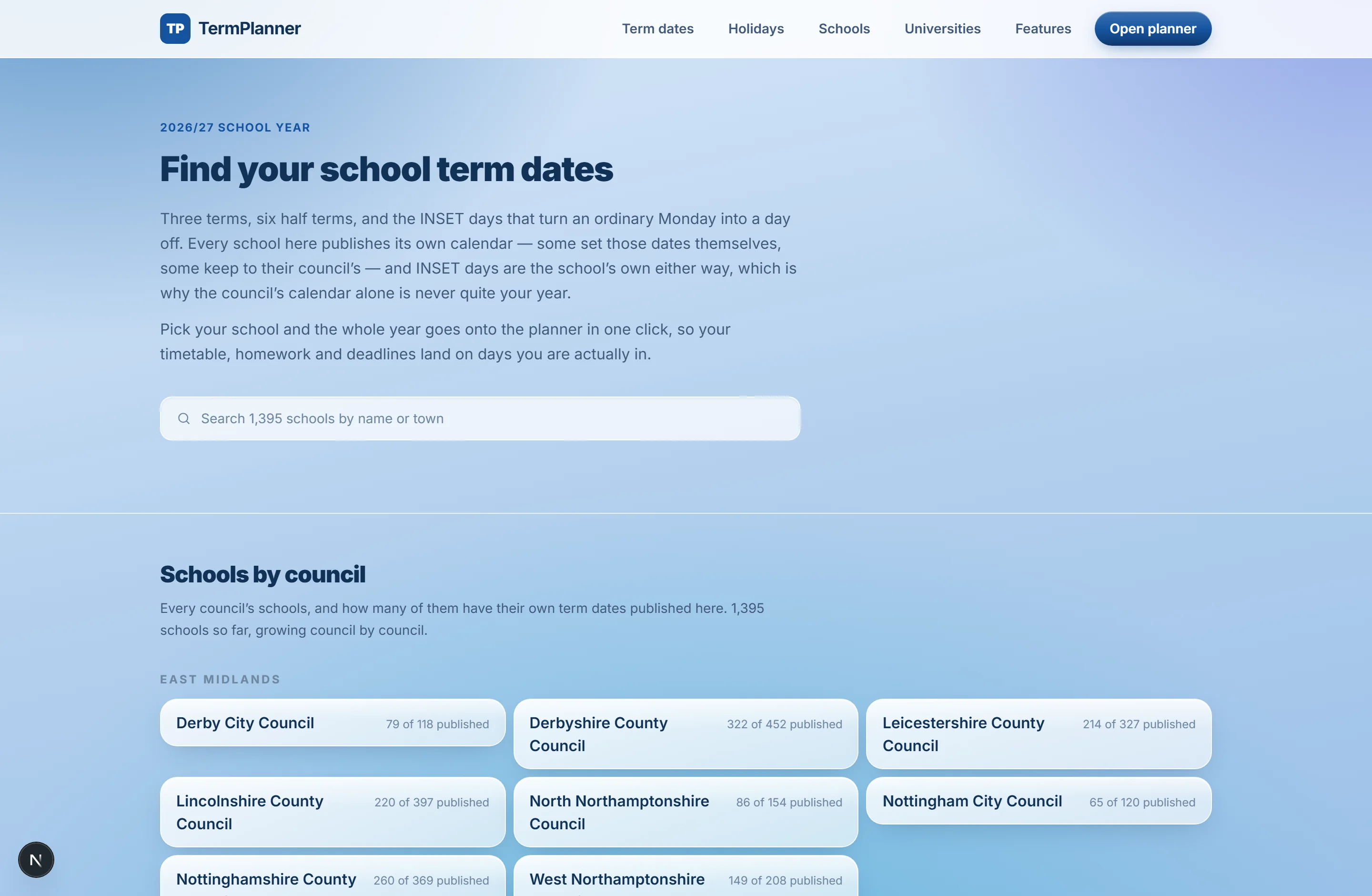
Search 2117 schools by name or town, or pick the council. Most term-date sites stop at the council, which is the wrong unit: an academy sets its own year, and the council's page will not tell you it has.
Two. Its own dates, from its own source
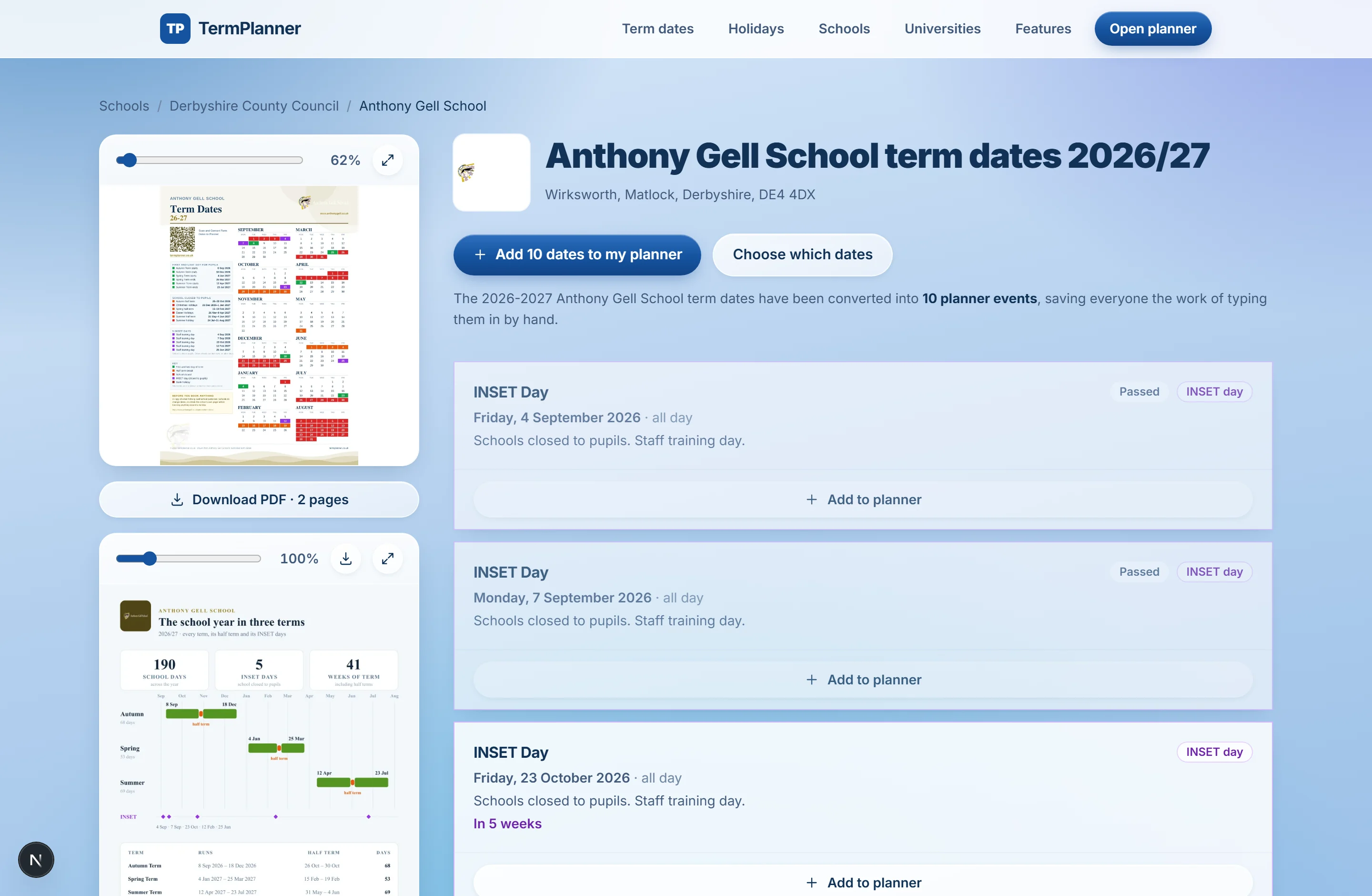
Every school page carries the year that school published, with a link to the exact page or document it was read from: its own term-dates page, or the PDF it sent home. Where a school publishes nothing readable, it is not published here at all rather than filled in with the council's year.
Three. The council's year, where that is what you need
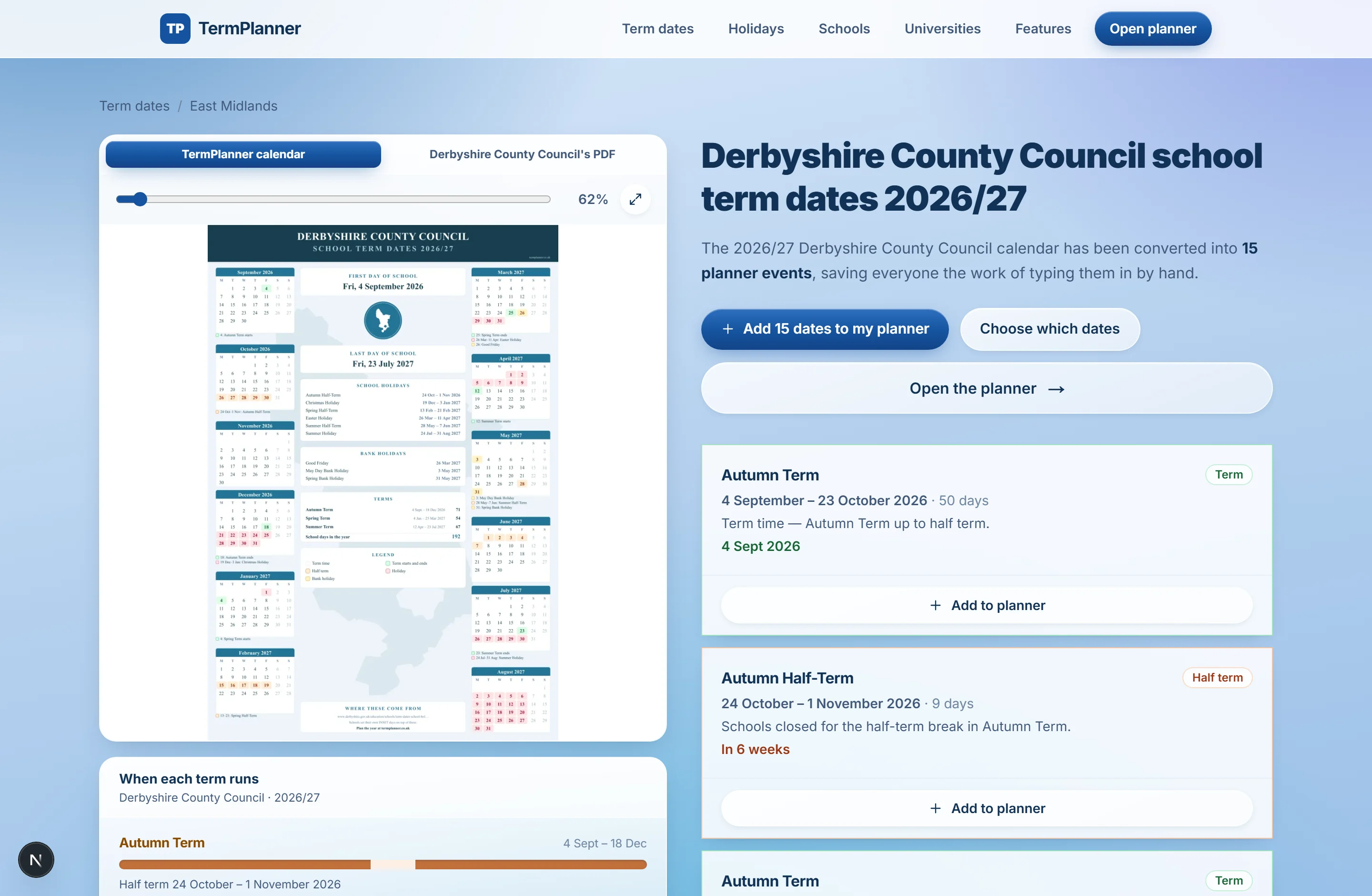
All 146 councils in England and Wales, each transcribed from the calendar it published. Useful in its own right, and the thing a school's year can be compared against.
Four. Onto a planner, in one press
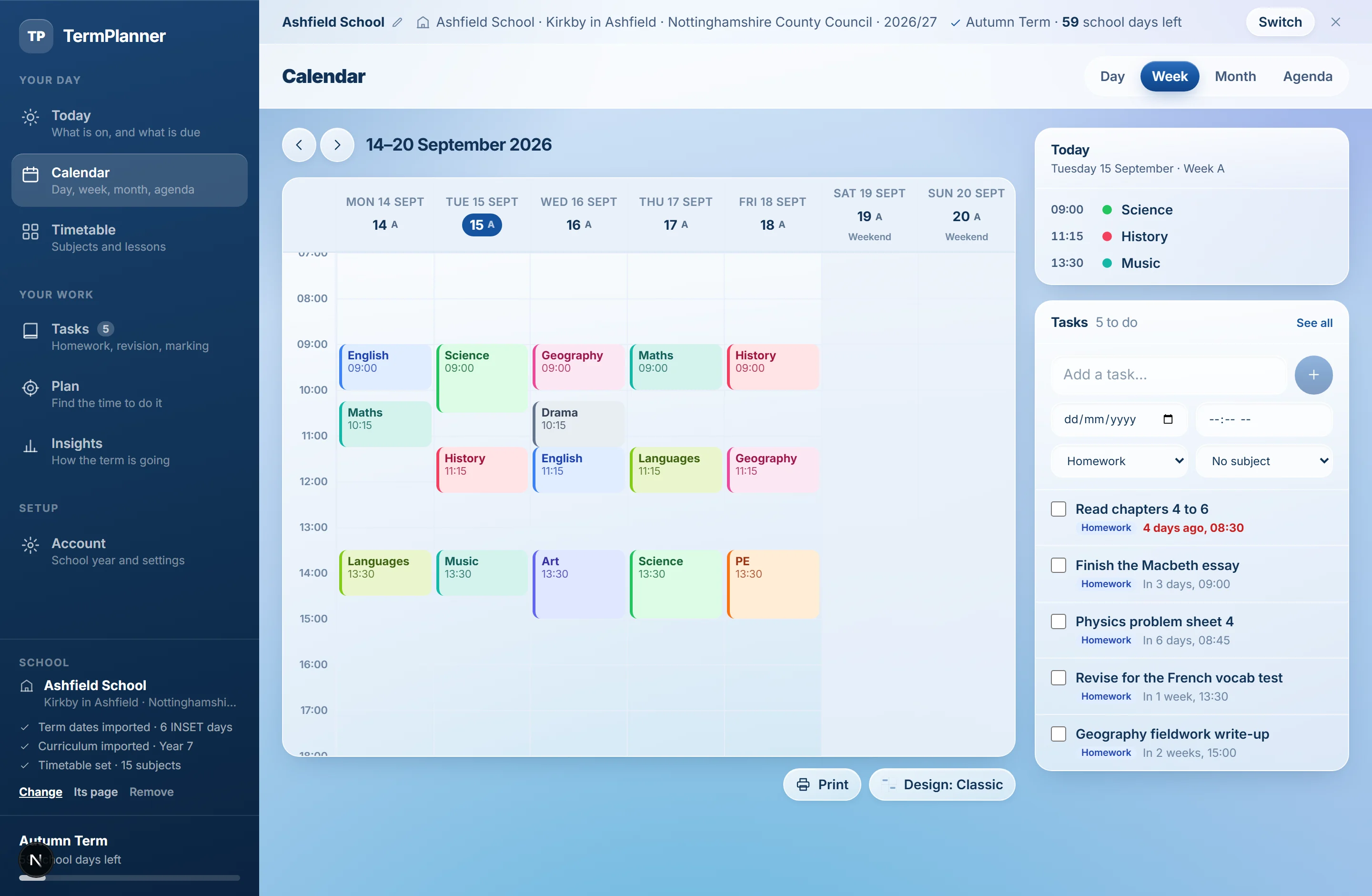
The dates become a calendar you can work on rather than a page you keep going back to. Closed days stay closed, lessons do not run through half term, and homework sits on the days it is due.
What gets published, and what does not
A school earns its page
- Its dates must be cited to the school’s own page or document. A year with nothing behind it is the council’s year wearing a school’s name.
- All three terms must be there. Two terms and a guess is not a school year.
- The days must add up. A year that lands outside the statutory band has been misread somewhere, and a misread year is worse than none.
Where the dates come from
- A school’s own term-dates page, read as text.
- The PDF it sends home, including the year-to-a-page wall planners, which carry no sentences at all and are read by the colour of each day instead.
- Its council’s published calendar, where that is genuinely what the school follows.
Dates change. Every page links to the source it was read from, so the school’s own page is always one click away. Check it before booking anything around a holiday.
Take Hertfordshire. The council publishes one calendar, which is the Hertfordshire County Council term dates page, with its holidays on their own. The 590 schools in Hertfordshire are listed with whose dates each follows, and 456 of them have their own year published, such as Abbots Langley School.